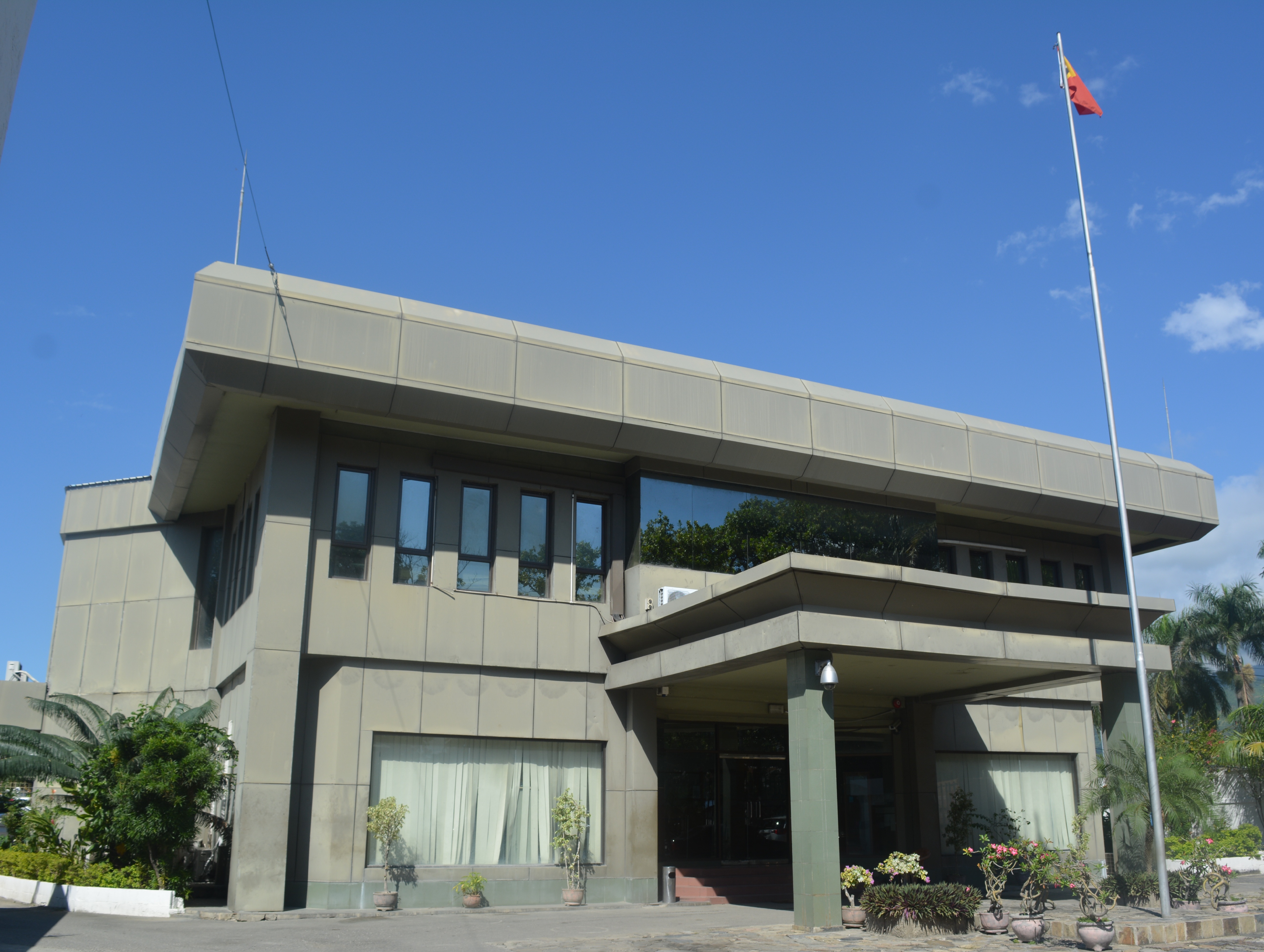
The Central Bank is the monetary authority of Timor-Leste,
and enjoys legal, operational, administrative, and financial autonomy. It
aspires to the highest standards of Stability, Transparency and Prosperity. The
Central Bank’s aims are expressed in its mission statement: "to be a
central bank staffed by a professional team that strives to continuously
improve the quality of our services to our stakeholders by maintaining a
sustainable monetary system with low inflation; ensuring that payments systems
are efficient and effective; promoting a safe and credible system of financial
institutions; communicating and providing information; undertaking sound
economic research and analysis; by developing the necessary organizational and
technical capacities".
History
The Central Bank of Timor-Leste was formally established on
13 September 2011 under law no 5/2011 in accordance with Article 143 of the
Constitution. Previously, central banking functions in Timor-Leste were carried
out by predecessor organizations, the Banking & Payments Authority of East
Timor (2001 to 2011) and the Central Payments Office (2000-2001) both of which
were created by the United Nations Transitional Administration of East Timor
(UNTAET) which administered the country from October 1999 to May 2002. The
Central Payments Office held the government account (CFET) and made government
payments, was responsible for bank licensing and supervision, and operated the
Dili clearinghouse. The Banking & Payments Authority added to those
functions the licensing and supervision of insurance companies, the publication
of monetary and banking statistics and other economic information, the
operational management of the Petroleum Fund, the issuance of centavos coins,
and the operation of the Credit Registry Information System (CRIS) and the
Large Value Transfer System (LVTS).
Organization (organization chart)
The BCTL structure is comprised of four Departments:
the Department of Financial System Supervision, the Department of Payments, the
Department of Administration and the Department of Petroleum Fund; three
independent Divisions: Accounting and Budget, Economics and Statistics, and
Information Technology; and two specialized supporting Offices: the Legal
Office and the Internal Audit Office.
Currency
The US dollar is the legal tender in Timor-Leste. All
denominations of US banknotes and coins circulate in the country. The BCTL
issues national coins as sub-units of the US dollar in denominations of 1, 5,
10, 25, 50, 100 and 200 cents.
Code of Conduct
All persons who have contractual obligations with the BCTL
shall at all times adhere to the policies set out in the code of conduct.